Building the Game Snake
The Final Project
· 4 min read
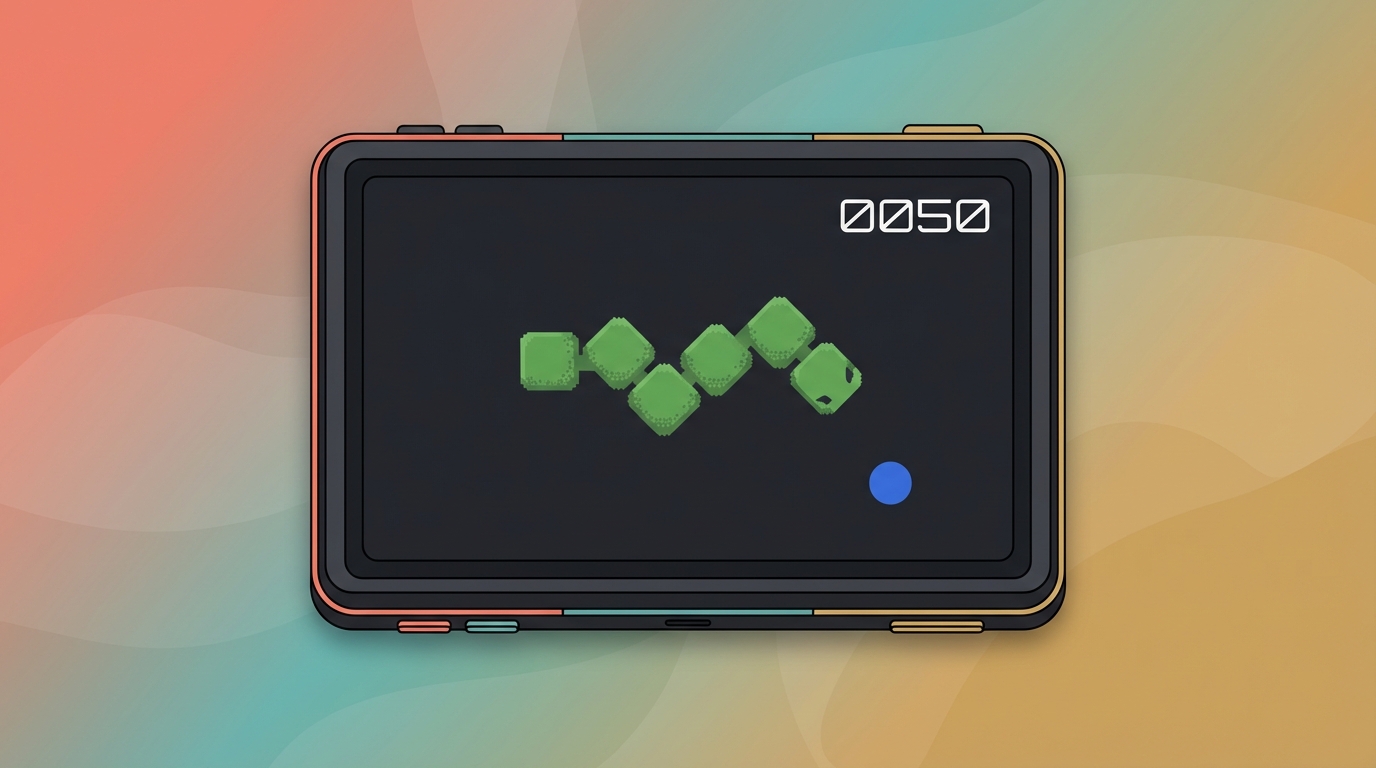
In the previous unit, we covered game loops, state management, and collision detection. Now let's put it all together and build Snake.
The Final Project
In the previous unit, we covered game loops, state management, and collision detection. Now let's put it all together and build Snake.
Building Interactive Games with Turtle
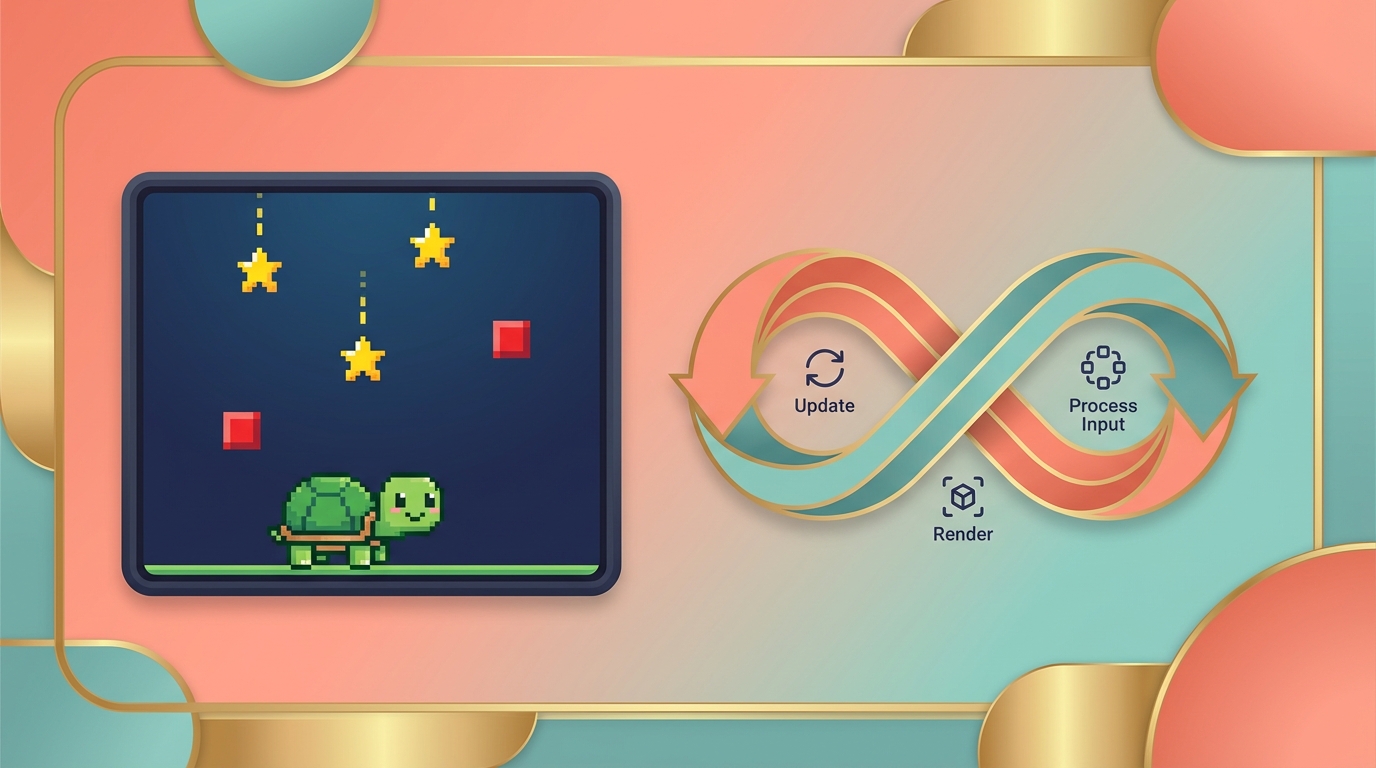
In the previous unit, we covered project management with Poetry. Now we're shifting back to Turtle graphics to explore game development concepts that we'll use in the final unit to build Snake.
A Visual Approach with Turtle Graphics
When I set out to teach my kids programming, I wanted something different from the typical "Hello World" progression. I wanted them to see what their code was doing, immediately, on screen. That's what led me to Python's Turtle library.
Turtle gives you a little cursor that you can move around the screen with code. Tell it to go forward, turn left, change colors. The feedback is instant and visual. For someone just starting out, that connection between typing code and seeing something happen is everything.
This course grew out of that experience. It starts with the absolute basics (what even is programming?) and builds through thirty-four units to a working Snake game. Each unit has theory, code examples, and a mini project. The projects all use Turtle, so you're building something visual every step of the way.